Wednesday, May 11, 2011

web work 6: Jacob Riis


Jacob Riis
was a Danish American who known for his photojournalistic talents, as they led to social reform. During the late 1800s and early 1900s Riis sought to help out the poor and draw attention to unsuitable living conditions and people stuck living in the slums and impoverished areas of New York. He wanted to illustrate these people so that society would stop ignoring them and realize just how bad conditions were. Riis sympathized with the poor because he himself had once been poor in the New York area, but then got a job working as police reporter, where he also wrote about life in the slums. Riis did a lot of work sneaking into dark corner bars with his flash camera, set off the flash, take the picture and then get out of there.

For his full Bio, click here:
http://en.wikipedia.org/wiki/Jacob_Riis

web work 5: Hurter and Driffield


Ferdinand Hurter and Vero Charles Driffield were 19th century scientists who are responsible for first really making film that had certain exposure times and methods of development and how silver changed under different conditions and variables, this is known as sensitometry. They also worked with densitometry, which is the measurement of optical density in light sensitive materials, such as film. They are the people responsible for developing the predictable/easy to use film and exposure times that we use in photography nowadays. It has to be some of the most intense science done for an artistic purpose…

check out the wikipedia article for more details:
http://en.wikipedia.org/wiki/Hurter_and_Driffield

web work 4:Pinhole photography


Pinhole Photography
Typically, a pinhole camera is something that someone has constructed out of makeshift items (seashell, pop can, shoe box) in order to get a “camera” that has no lens; it is a boxlike shape with a hole on one end, and on the other appears film or photopaper. Its like a little camera obscura! Pinhole photos have a different appearance than photos taken with a camera and a lens (obviously if you construct a camera out of an empty Pabst can and photo paper its going to look slightly dirtier than a film+lense+camera print). This is what makes it interesting.

very long article to check out if your intrigued by this:
http://photo.net/pinhole/pinhole

web work 3: Transcendentalism

Transcendentalism
was a movement that happened in the 1800 , it was caused by a group of people who would become known as transcendentalists when they decided that people need to be in touch with nature (they thought nature was a necessity for human beings {and they were right}), it goes hand in hand with romanticism (which was a movement in literature at a similar time where people started to incorporate nature into their work more [Mary Shelly: Frankenstein]) To get an idea of what a transcendentalist is like, think of a Victorian era hippie; Henry David Thoreau is the exemplification.


Alfred Steiglitz, untitled,1923 transcendental influence^^^^^

Click on this giant link to see an online book that discusses transcendentalism and its connection to photography:

http://books.google.com/books?id=HNBSmv5ZcPkC&pg=PA453&lpg=PA453&dq=alfred+stieglitz+transcendentalism&source=bl&ots=9vpMq0eiFG&sig=wI8PheSa1XIf2UWDLjkUo6hEH0E&hl=en&ei=5APLTaSOB8a-0AGkuIDtBw&sa=X&oi=book_result&ct=result&resnum=1&ved=0CBoQ6AEwAA#v=onepage&q=alfred%20stieglitz%20transcendentalism&f=false

Monday, May 9, 2011

Web Work 9 Minnesota Photographers

I didn't want to just choose a single photographer native to Minnesota so heres a few and some of their work:


Joanne Verburg:


Herself: 


Xavier Tavera: 


Alec Soth: 


Douglas Beasley:


Web Work 8 Steve McCurry

I randomly picked a photographers name from a list and I choose Steve McCurry, and when I looked him up I was shocked to see that very famous picture of the "Afghan Girl".  This photo first appeared in Natoinal Geographic gaining McCurry his fame.  

McCurry studied cinematography and film making at Penn State University.  But he ended up getting a degree in theater arts in 1974.  This is when he began to be interested in photography taking pictures for the Penn State newspaper.  McCurry went to Afghanistan and disguised himself in native dress and hid his film by sewing it into his clothes.  He was photographing the Soviet war in Afghanistan when he took the picture of the "Afghan Girl" in a refugee camp.  The photograph was named the most recognizable photograph by National Geographic.


Eastman Kodak let McCurry shoot the last ever produced roll of Kodachrome transparency film.  The film was processed by Dwayne's Photo in Parson's Kansas and is housed at the George Eastman House.  

Web Work 7 William Wegman

William Wegman received Bachelors and then a Masters in fine arts for painting, but his career ended up being in the field of photography.  His photography career started when he got a dog, a Weimaraner, he named Man Ray.  This dog became the subject of most of his photographs until he got a second dog he named Fay Ray.  

Wegman appeared on the Tonight Show in 1992 where he explained that he used a tennis ball to capture the dogs attention in the background in order to get the photos he got.  Wegman was also a artist in residence at Phillips Academy in Andover Massachusetts and the Massachusetts College of Art in Boston where he received the colleges Distinguished Alumni Award.   Not only did he make an appearance on the Tonight Show, he was also on Animal Planets "Dogs 101" and Sesame Street.  His photos also hold permanents residence in the Hammer Museum, the Los Angeles County Museum of Art, Montgomery Museum of Fine Arts, and the Smithsonian American Art Museum.

Web Work 6 Margaret Bourke White

Margaret Bourke White was an American photographer who made many break throughs in photography for women.  She was the first woman to be a war correspondent, first woman to work in combat zones, first person to be permitted to photograph the Soviet industry and the first woman to photograph for Life magazine, having her picture on the cover.  

She graduated from Cornell University with a B.A. in 1927 and moved to Cleveland Ohio and started her commercial photography.  She started photographing the production of steel but got lots of criticism for being a woman in a steel factory.  They said her and her camera were to delicate in be in the factory.  But she proved them wrong when she used magnesium flares to light up the scenes she photographed and took some of the best steel industry photographs ever taken.

Also in 1941 she was the only foreign photographer to be in Moscow when Germany invaded it.  She was the first woman to work in the war field as a photographer.

Web Work 5 Eastman

George Eastman was someone who put a lot into the development of camera and camera film.  Eastman was the first to invent roll film and he also start Eastman Kodak Company.  The company that would be the modern Kodak we know today.  In 1888 he perfected the Kodak camera which was the first camera that was especially made to use roll film.  Eastman's Kodak company was made in 1892 and was one of he first company's to mass produce photography equipment.

His invention of roll film served as a vital step towards the invention of a motion picture film.  Eastman has many US patents including a patent for "Photographic Film" and a "Roll Holder" for the film as well as one for the Kodak camera he invented.

Web Work 9- Douglas Beasley


Danielle


Horse in Badlands

Douglas Beasley's work has a peacfulness and serenity that is absolutley apealing! He some how manages to turn photographs that could just be any ordinary picture and turns them into something truly inpspiring. You can sense his passion in his work, and the message he is trying to bring forth. I beleive that his is trying to give people a sense of hope, faith, and belief through his picutres and he does it with great success.

His work has been published internationally, and featured in multiple magazines. Beasley is the founder, as well as, director of Vision Quest Photo Workshops which are held in various places around the world. At these workshops, he focuses on personal expression and creative thinking of the mechanic of the camera. He has one book published, and another to be published in the fall of 2011. He does not stop there, he also does work for fine art based commericals and editorial assignments througout the world. He currently is resided in a seculded home in St. Paul, Minnesota. He uses his images as the starting point for his viewers own spiritual journey.

VII Photo Agnency- Web Work 8


I love the VII Photo Agency photo's becuase they make extremely bold statement with each photo having a strong message behind it. Some I feel are making a political statement, will others make an ethical statment. Some are possible just trying to show the way of life in a particular culture.

I was trying to think of the best way to describe the agency, but i feel that they themsleves have done it better then i ever could, so i will quote directly from their website viiphoto.com. " VII is an innovative online project that gives readers unprecedented intimte access and insight to the work of the world's leading photojounalist, accompianed by intimate commentaries of the photographers themselves". The VII Agency was founded collectivley by photo-journalist in September 2001. Together, the current photo- journalists document conflicts of all kinds, such as, environmental, social, political, violent and non-violent. I believe that what these jounalist do it amazing, they are bringing awarness to the injustices, problems, and diverse cultures of the world. They do this respectfully, tastefully and artistical and should commended for the efforts to make other aware of the world around them.

Sally Mann Web Work 7


Candy Cigarette

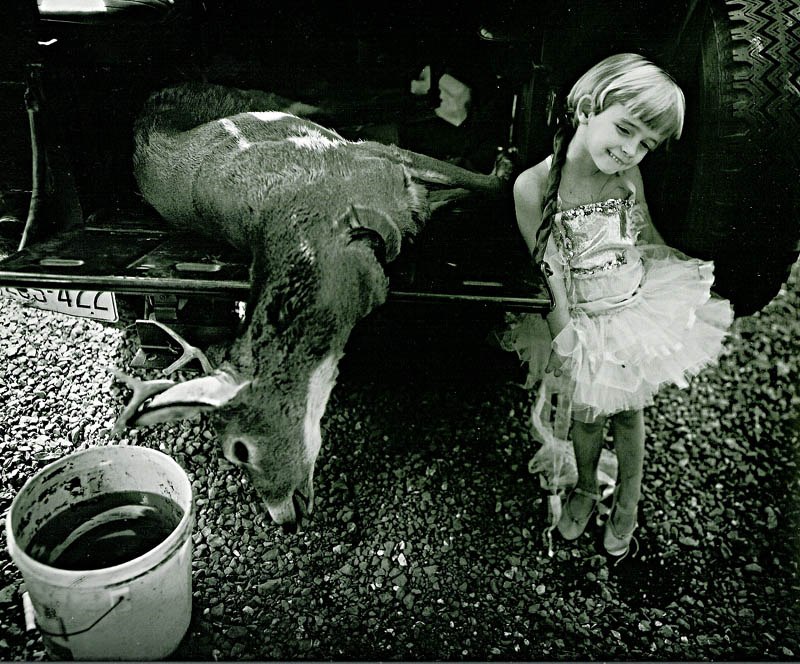
Jessie and the Deer


One of the reason I like Sally Mann's work, its because she is so bold. Some may consider her images to be inappropriate, but I strongly disagree. I think she looked at her children in an extremely artisitic way as they go about thier daily lives. This artistic view shines strong in her images.

Sally Mann still lives and works in the hometown she was born in, Lexington, Virginia. She has taught throughout the nation, and her work is in the collection of numerous musuems nationwide. She has produced series on portraiture, architecture, landscape, and still life. My favortie of her work is her portraits of her children. Although she has done some color images, most of her work remains in the black and white, or antique technology. In 2011, Mann was named by Time magazine as America's Best Photographer. She has had two documentaries done about her. Sally Mann, shows diverse artistic ability and has had many accomplishes. She gives inspirtation to others through her extremely unique images.

Saturday, May 7, 2011

Edouard Baldus (webwork #3)

Edouard Denis Baldus was born on June 5 1813 in Gruenbach, Prussia. Originally an aspiring painter, in 1849 he took a commission from the French government to photgraph historical buildings. Edouard's high quality of work won him great approval in the french government where he was again commissioned to photograph architecture in Paris in hopes of reviving interest in Roman architecture. In 1855 Edouard was commissioned by Baron James de Rothschild the president of the Chemin de fer du Nord (which was a prestigeous railway company) to do a series of photographs that were to be a part of an album that was to be given to Queen Victoria and Prince Albert as a souvenier. Edouard was famous for putting multiple negatives together to form one massive 8foot image. Edouard used salt paper prints and Albumin prints for most of his works which now sell for anywhere from $2,000 to $10,000.

Friday, May 6, 2011

Marilyn Bridges


PART A
Maryilyn Bridges was most famous for her aerial photography. She photographed both modern and ancient landscapes most of the time they held religious value. She was born in 1948 and graduated from college in the early 1980's, however she started photographing landscapes in early 1970's in brazil and then gained interest in aerial photography when she took pictures of the Nazca Plain, in Peru.

Part B

PDN is an incredible source for all your photography and design needs. I found this article interesting because it specifically addresses the dangers of war photography and it interviews a photographer who had done work in Baghdad.